

OK, so we said that we were heading back to reality and yes we are home in PCB right now but we had to fly from San Juan to get here. You know us, of course we had to explore Old San Juan and be tourists one last time before we headed home.
Are we lucky or what 🙂
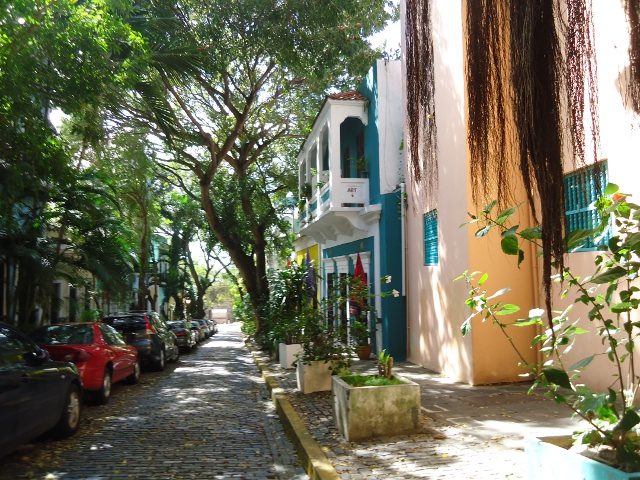

Wooden puppets hanging above a shop.

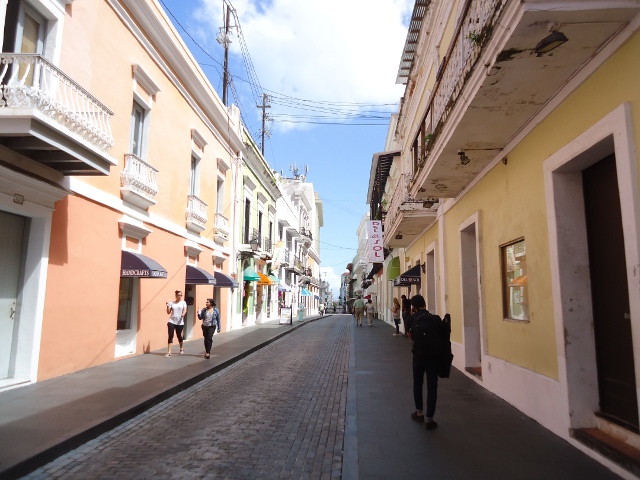

Until this visit to San Juan we had only seen the western and southern coasts of Puerto Rico. (I know what you are thinking, we picked up Rachel from the San Juan airport a couple of months ago, but it was dark and we did not stay to explore the city. That was strictly a pick up and go from the airport kind of thing)
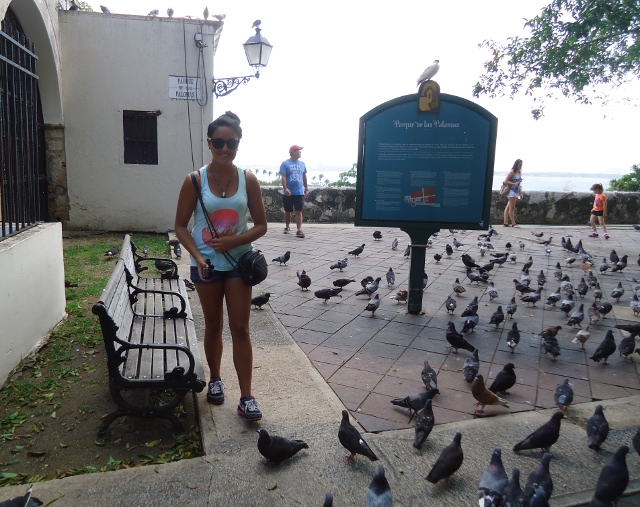
Parque de las Palomas (Pigeon Park).

Parque de las Palomas in Old San Juan has been surrendered to the birds. Don’t bring any food there unless you want to be perched on and pooped on! We opted to take just a couple of pictures and then get out of there…it was a bit creepy to be surrounded by all of these birds!

This beautiful old chapel is Capilla del Cristo (Cristo Chapel). It was built in 1753. There are different versions of the story of why it was built – either by a thankful father whose his son lived after his son and his horse fell over the wall, or by a sad father whose son died after falling over the wall on his horse. Either way, the altar is made from thousands of the silver “promesas” that are given as offerings for a wanted miracle.
San Juan is on the north coast and is the capital and most populous city in Puerto Rico.The city was founded in 1521 by Juan Ponce de León, who named it City of Puerto Rico (Rich Port). Today, San Juan is known as La Ciudad Amurallada (the walled city) and is one of the biggest and best natural harbors in the Caribbean.
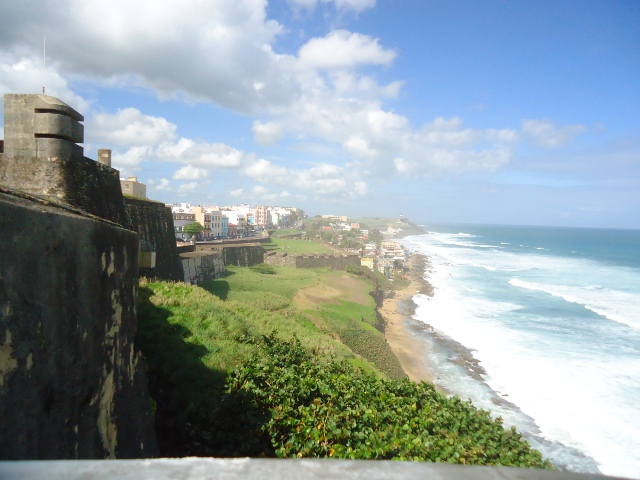
San Juan is the oldest city under U.S. Jurisdiction. Some argue that St. Augustine, Florida, is the oldest city and in a way it is, but it is the oldest city in the continental United States, not the oldest under U.S. Jurisdiction. Either way, this place is something else to see!

The Puerta de San Juan (San Juan Gate) was built in the late 1700s, is one of six heavy wooden doors in the wall which for centuries were closed at sundown to cut off access to the city and protect the city from invaders. The wall is up to 20 feet thick and up to 40 feet tall.
From the minute that you arrive inside the walls of the city you are surrounded by hundreds of years of history and you can almost feel the past inhabitants. Wandering down the blue cobblestone streets there are new surprises around every corner. We did not have enough time but I think that taking a ghost tour here would be really interesting!

Many of Old San Juan’s narrow streets are paved with adoquines, blue-glazed brick brought over on Spanish galleons as ballast.
The streets here are paved with cobbles of adoquine, a blue stone cast from furnace slag; they were brought over as ballast on Spanish ships. These are the most unique cobblestone streets that we have ever seen…so pretty!

Cementerio de San Juan (San Juan Cemetery), is located next to El Morro Fort over looking the Atlantic Ocean. The cemetery is famous for its elaborate tombstones and the circular neoclassical chapel dedicated to Mary Magdalen.

Another view of Castillo de San Felipe del Morro (“El Morro”)
El Morro is the largest fort in the Caribbean. The tunnel that you see in the front of the picture leads to the cemetery.
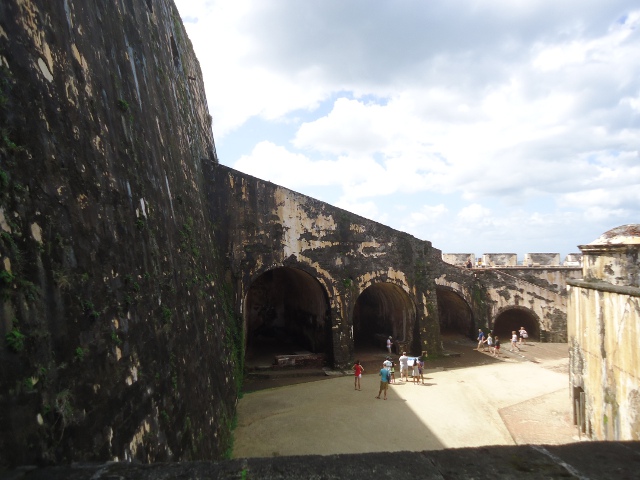

El Morro is a huge, six-level fortress built to protect the city from sea invaders. The Fort itself was originally “completed” in 1589, but the massive walls were added in the mid 1700′s .


Lighthouse of the Castillo San Felipe del Morro
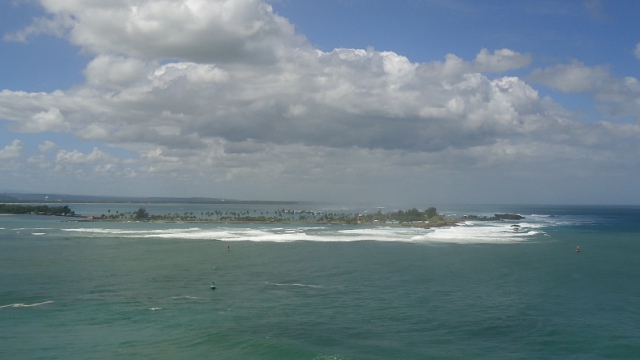
Situated at the mouth of the San Juan Bay across from El Morro Fort, Isla de Cabras (Goat Island) was a key component of San Juan defenses and became the home for a small strong hold known as El Cañuelo (San Juan de la Cruz) that was built in the early1500’s and replaced by the current structure in 1660. Isla de Cabras was also home to a small leper colony between 1800’s – 1900’s.
We toured the two largest forts in the city, Castillo de San Felipe del Morro (“El Morro”) and Castillo de San Cristóbal (San Cristóbal Fort). We explored tunnels, walked up and down what felt like a million stairs and the views of the Atlantic Ocean and the city from the top of the forts were just…wow…incredible! The forts are a maze of tunnels, dungeons, barracks, outposts and ramps and we tried to explore every nook and cranny that we could!

Castillo de San Felipe del Morro (“El Morro”). Off to the right is the San Juan Cemetery.
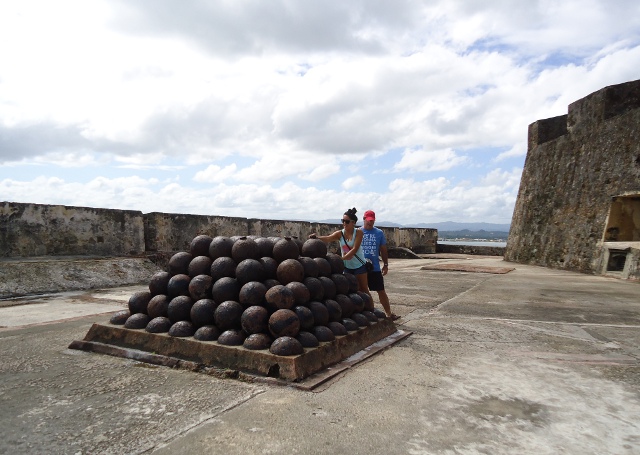

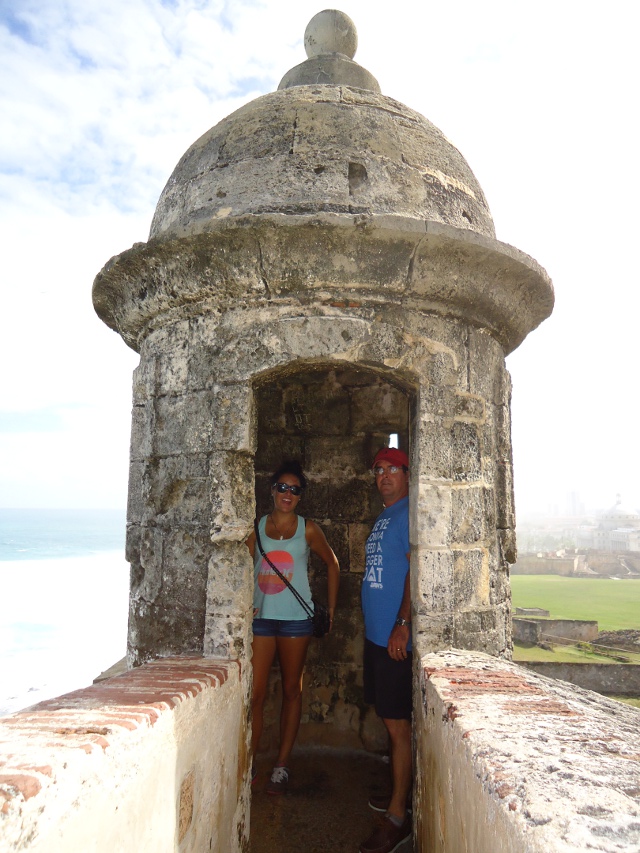
El Morro is studded with small, circular sentry boxes called “garitas” that have become a national symbol.
We only spent one day here so we packed in all that we could see. As you can imagine were were pooped by the time we got back to our hotel! I bet that you could spend a week here and still not see all that there is to see in this wonderful city.
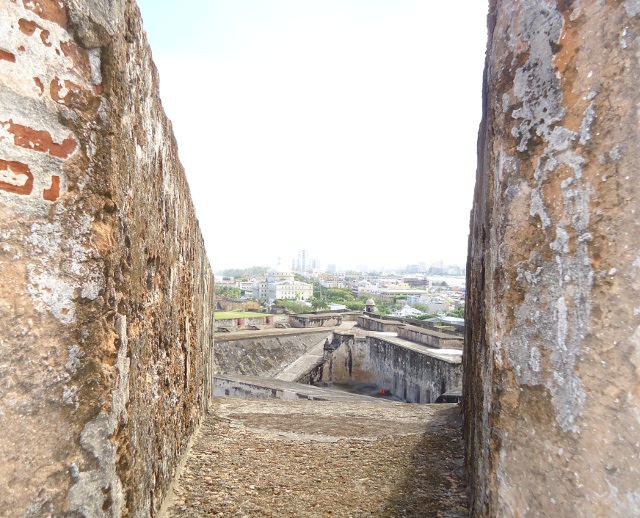
It was a bit of a hazy day but this is a view of the city below from atop the fort.
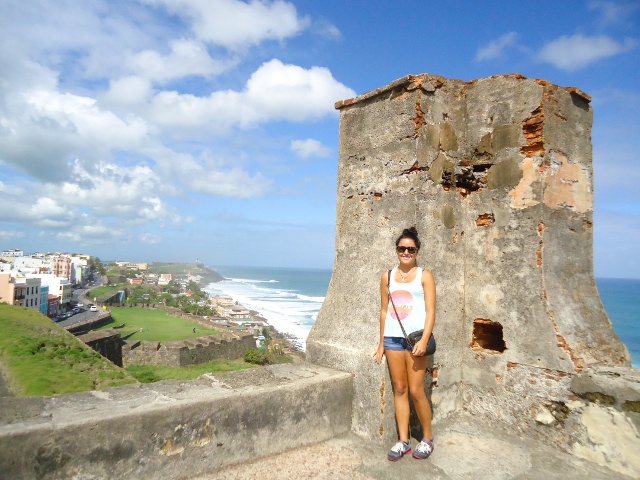

Castillo de San Cristóbal (San Cristóbal Fort) is El Morro’s partner in the city’s defense. Built in 1634 (completed in 1771), was considered the Gibraltar of the West Indies. San Cristóbal was supported by a massive system of outworks which provided defense in depth and is is one of the largest defenses ever built in the Americas. It rose 150 feet, covering 27 acres of land. As if its size and height weren’t sufficient to intimidate enemies, its intricate modular design was sure to foil them. A strategic masterpiece, it features five independent units, each connected by moat and tunnel; each fully self-sufficient should the others fall.


The National Park Service flies three flags over the forts of Old San Juan. The Burgundy Cross, the flag of the commonwealth of Puerto Rico and the US flag. The Burgundy Cross was the Spanish military flag that flew here during most of the Spanish colonial period.
If you ever get the chance the place to stay is in Old San Juan and then everything will be right out your doorstep and ready to be explored. It was in my opinion still a big city and although it was fun to visit I was looking forward to getting back to our little Panama City Beach.
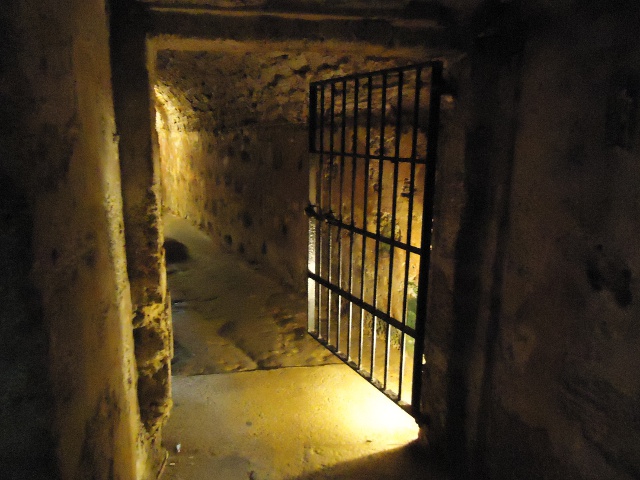
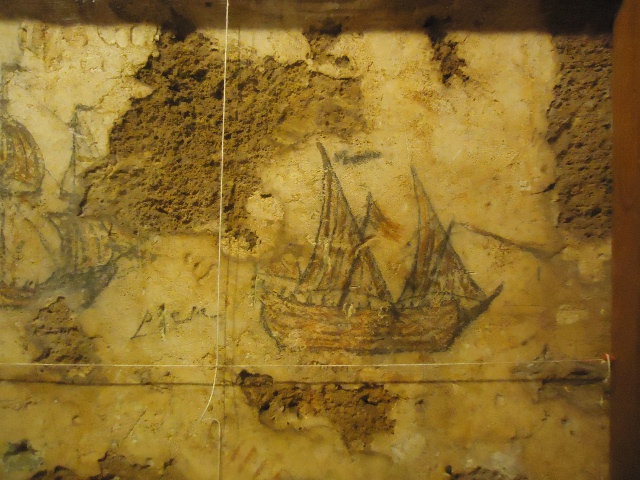

Drawing of a ship inside of the many tunnels that we explored.
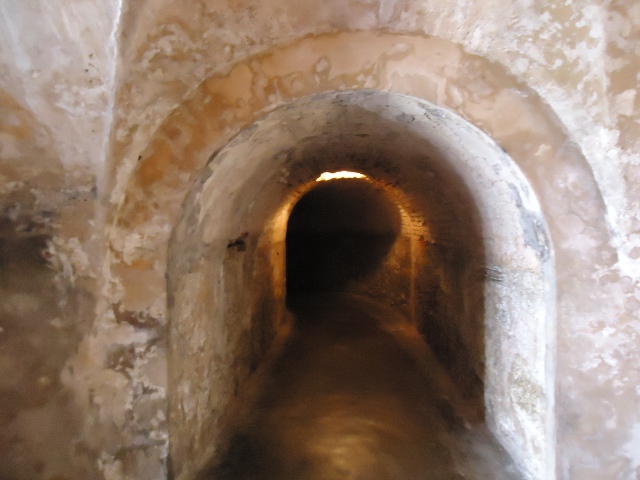
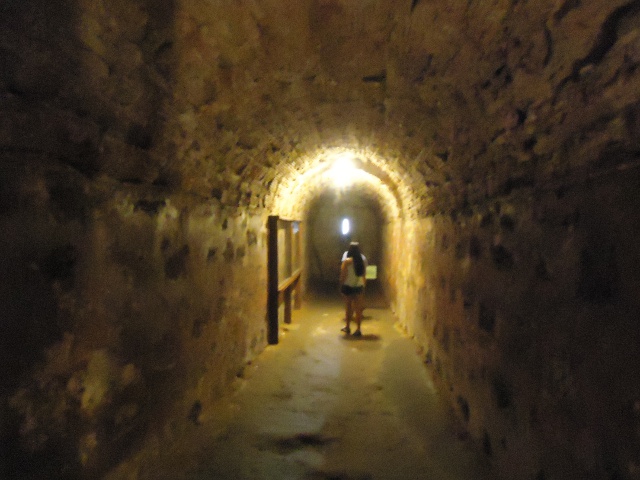
Long tunnel leading to Castillo San Cristóbal’s main plaza. This tunnel is the longest of six hidden passages in the fortress.

We had a good flight from San Juan, PR to Atlanta and even were upgraded to business class…nice big seats and free drinks, can’t beat that! Atlanta to PCB was a smaller and more crowded flight but thankfully a short one!

One of the many statues that we saw in Old San Juan. I thought that this was was pretty cool…. Eugenio María de Hostos – This statue of Eugenio María de Hostos (The Citizen of the Americas)
So here were are back in Panama City Beach. Strange, after being on the boat once again for over 18 months, landlubber life is not what I remember, or maybe I had just forgotten. Love the unlimited hot water showers and big stove and oven that our new place has but I’m missing being on Moon already. OK, so maybe I’m not missing actually being on the boat but for sure I’m missing being where the boat is…a little island off of Pureto Rico where the water is crystal clear, there are turtles swimming all over the place and it’s still 80 degrees!
Yup not liking the cold here!
Take care everyone and I’ll keep you up with what we’re doing here in good old PCB:-)
Jennifer, Brian and Rachel